
Glyndŵr’s Way winds its way through the quiet heart of mid Wales, a part of the country that many visitors overlook entirely in favour of Snowdonia to the north or the Pembrokeshire coast to the west. That, in many ways, is exactly its appeal. Powys is Wales’ largest county but one of its least populated, and walking through it feels like stepping into a landscape that has changed very little in generations – a patchwork of hill farms, drovers’ tracks and river valleys where sheep still outnumber people many times over.
The trail takes its name from Owain Glyndŵr, the Welsh nobleman who led a fifteen-year rebellion against English rule at the turn of the fifteenth century. Descended from the princes of both Powys and Deheubarth, Glyndŵr became the last native Welshman to hold the title Prince of Wales, and in 1404 he summoned a parliament to Machynlleth, a small market town the trail passes directly through today. Wander through Machynlleth now and you can still visit the building said to mark the site of that parliament, a reminder that this gentle walking country was once at the centre of a fight for Welsh independence.
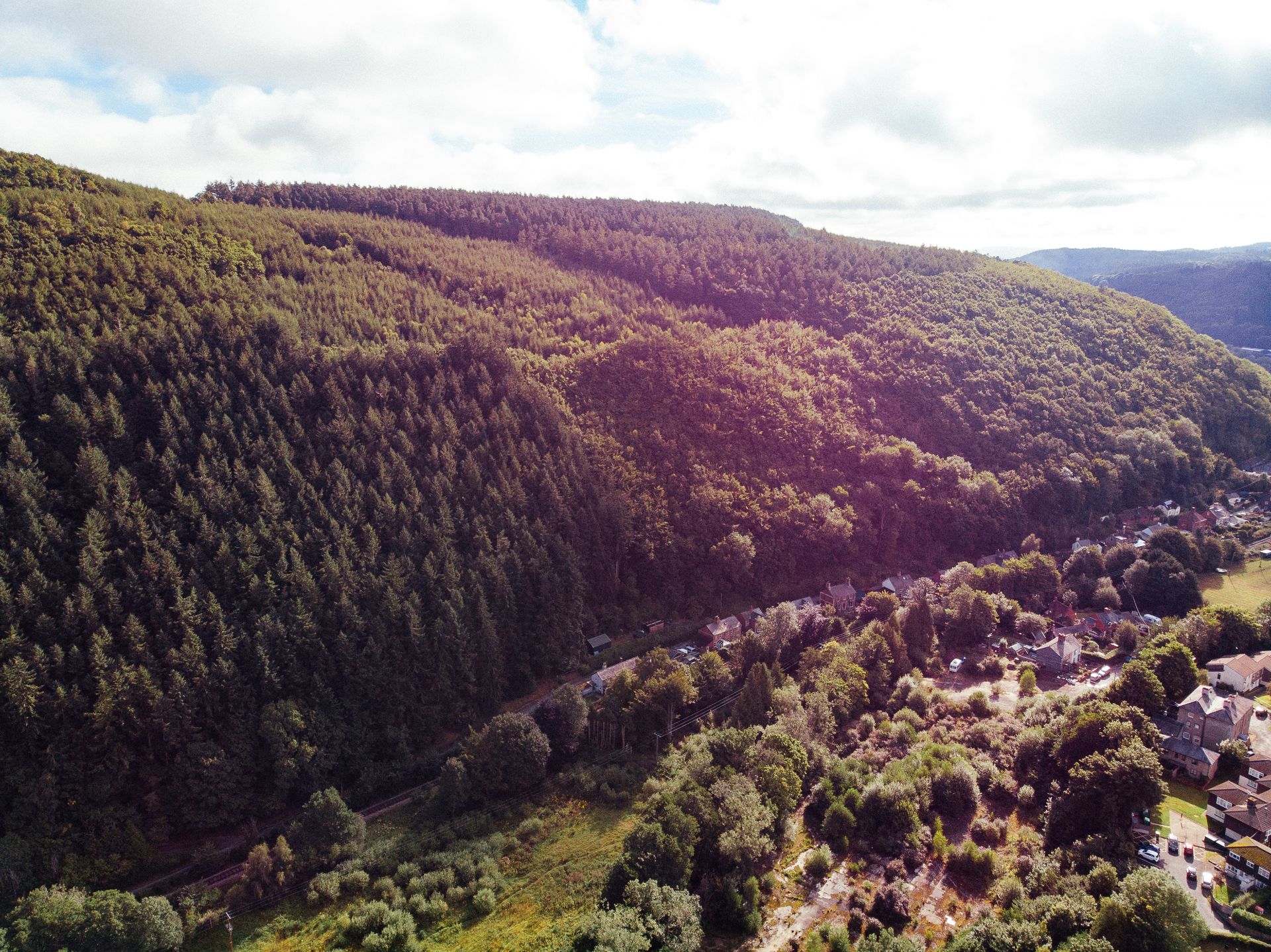
Geographically, the route traces a great horseshoe between the border town of Knighton and the market town of Welshpool, dipping west almost as far as the Dyfi estuary along the way. In between lies an ever-changing procession of scenery: the gentle Radnorshire hills give way to open moorland, forestry plantation and the shimmering waters of the Clywedog Reservoir, before the trail climbs to its highest point at Foel Fadian, where on a clear day the view stretches out towards Cadair Idris and the Cambrian Mountains. It is a landscape built for walkers who enjoy discovering somewhere new around every bend, rather than a single dramatic peak to aim for.
Along the way, the trail threads through a handful of small towns and villages that give a real sense of rural Welsh life – Llanidloes with its distinctive black-and-white timbered market hall, the scattered farms around Abbeycwmhir and Bwlch-y-sarnau, and Llangadfan on the approach to Lake Vyrnwy, one of the finest reservoirs in Wales and a haven for wildlife. Red kites are a common sight overhead throughout mid Wales, a conservation success story the region is rightly proud of, while buzzards and skylarks provide the soundtrack to many a day’s walking.
What makes Glyndŵr’s Way genuinely special is its solitude. Despite being a fully waymarked National Trail, complete with the acorn symbol and its own dragon logo, it remains one of the quietest long-distance paths in Britain. Days can pass with barely another walker in sight, just farmers going about their work and the occasional flock of sheep to share the path with. For anyone hoping to properly switch off and immerse themselves in the Welsh countryside, away from crowds and traffic, this is about as complete an escape as walking in Wales gets.
Our self-guided walking holiday along Glyndŵr’s Way lets you take on this remarkable trail at your own pace, without any of the logistics to worry about. We arrange your accommodation each night in comfortable B&Bs and guesthouses, transfer your luggage ahead of you each day, and provide detailed Ordnance Survey mapping and route notes so you can walk with confidence, even across the trail’s more remote upland stretches. There are no fixed departure dates, so you are free to set off whenever suits you, and our emergency back-up service is always on hand should you need it. All we ask is a reasonable level of fitness and, ideally, some basic map and compass skills for the higher, more exposed sections of the route.
Day 1: Arrive in Knighton Make your own way to Knighton, a historic market town straddling the England-Wales border and the starting point for both Glyndŵr’s Way and Offa’s Dyke Path. Settle into your first night’s accommodation and enjoy an early dinner before setting off in the morning.
Day 2: Knighton to Felindre Approx. 15 miles / 24km An early climb out of Knighton takes you up through woodland and quiet pasture onto Beacon Hill, where the heather puts on a fine display in late summer. The trail then descends gently towards the small village of Felindre, your stop for the night.
Day 3: Felindre to Abbeycwmhir Approx. 15.5 miles / 25km Today’s walk climbs onto high pastureland, passing the ancient earthwork at Castell y Blaidd before dropping down into the wooded surroundings of Abbeycwmhir, once home to a Cistercian abbey and one of the quietest corners of the whole trail.
Day 4: Abbeycwmhir to Llanidloes Crossing open, grassy hill country and the tiny hamlet of Bwlch-y-sarnau, the trail winds in and out of wooded valleys before a final stretch of road leads you into Llanidloes, the first proper town since Knighton and well worth an evening exploring.
Day 5: Llanidloes to Dylife The route climbs steadily onto higher ground, skirting the Clywedog Reservoir, whose winding shoreline keeps reappearing as you cross the surrounding hills. You will finish the day close to Dylife, once a thriving lead-mining settlement, just before the trail’s highest section.
Day 6: Dylife to Machynlleth A short climb over open moorland brings you to Foel Fadian and the highest point of the entire trail, with far-reaching views towards Cadair Idris and the Cambrian Mountains on a clear day. From here it is a long, satisfying descent down the Dulas valley into Machynlleth, Owain Glyndŵr’s historic parliament town.
Day 7: Machynlleth to Llanbrynmair Leaving Machynlleth, the trail turns east once more, climbing back into the hills through quiet farmland and forestry as the route begins its long return leg towards Welshpool.
Day 8: Llanbrynmair to Llangadfan A day of rolling hill country and scattered farms, with the trail gradually swinging north-east towards the Vyrnwy valley.
Day 9: Llangadfan to Meifod The trail passes close to Lake Vyrnwy, a striking Victorian reservoir framed by forest, before continuing through gentle farmland towards the village of Meifod.
Day 10: Meifod to Welshpool The final stage begins in woodland before opening out onto the hill of Y Golfa, with a superb 360-degree panorama to mark your last summit of the trip. A long, easy descent through the parkland of Llanerchydol Hall brings you into Welshpool, where your walk along Glyndŵr’s Way comes to an end.
(Itinerary shown as an example – stages, mileage and overnight stops can be adjusted to suit fitness levels and available time.)